
Foundation raising in Kingman AZ - a house held where it is or brought back up
Cracks over the doors, a door that sticks or a floor that slopes? We'll help you decide whether to hold the house or lift it.
- Licensed and fully insured.
- Free on-site estimates.
- We respond within 1 business day.
Can a sinking house in Kingman be raised or held in place?
The short answer: Foundation raising in Kingman is the work of fastening helical piles, steel shafts with screw-shaped plates turned down into the ground, to a house that has settled, cracked or heaved, so the piles carry the weight and the house either stops moving or comes back up close to where it started.
Most people call us after a crack over a door keeps getting longer or a door that always closed starts to drag, and they want to know if the house is still moving and what it will take to stop it. The price turns mostly on how many piles your house needs, whether the crew can reach the settled wall from the yard or has to work from inside, and whether we're holding the house or lifting it, since lifting usually takes more time. The schedule depends on the review for your address and on how much concrete has to come out and go back, and the estimate after my visit is where your own figures come from.
How can you tell your foundation is settling?
Cracks at corners and doors
A crack running off the corner of a door or window, or up from a wall corner, usually means one part of the foundation has dropped more than the part beside it. Cracks like these tend to grow while the house keeps moving, and a longer crack means more patching later.
Doors and windows that stick
A door that used to swing shut and now rubs at the top, or a window you have to force, usually means the frame has been pulled out of square as the house settled. Planing the door only buys time, because the frame keeps shifting until the foundation under it is held.
A floor that slopes
When a ball rolls to one side of a room or a bookcase leans away from the wall, part of the slab has likely sunk. The longer it goes, the farther the house may have to come back up, and that is a bigger job than holding it early.
How our foundation raising work goes
I start by noting every crack, sticking door and sloping floor in the house, because where they show up tells us which part has moved. Then we talk with you about the goal, holding the house where it is or bringing it back up, since the makers of helical piles describe them doing either one and the plan changes with the choice. On the job our crew digs down to the footing, the concrete base at the bottom of the foundation, and one pier maker's install guide runs that dig either as a trench along the whole wall or as a square hole at each pier, so it's fair to ask which your job will use. Once the piles are carrying the house, we backfill, put back any concrete that had to come out and clean up.
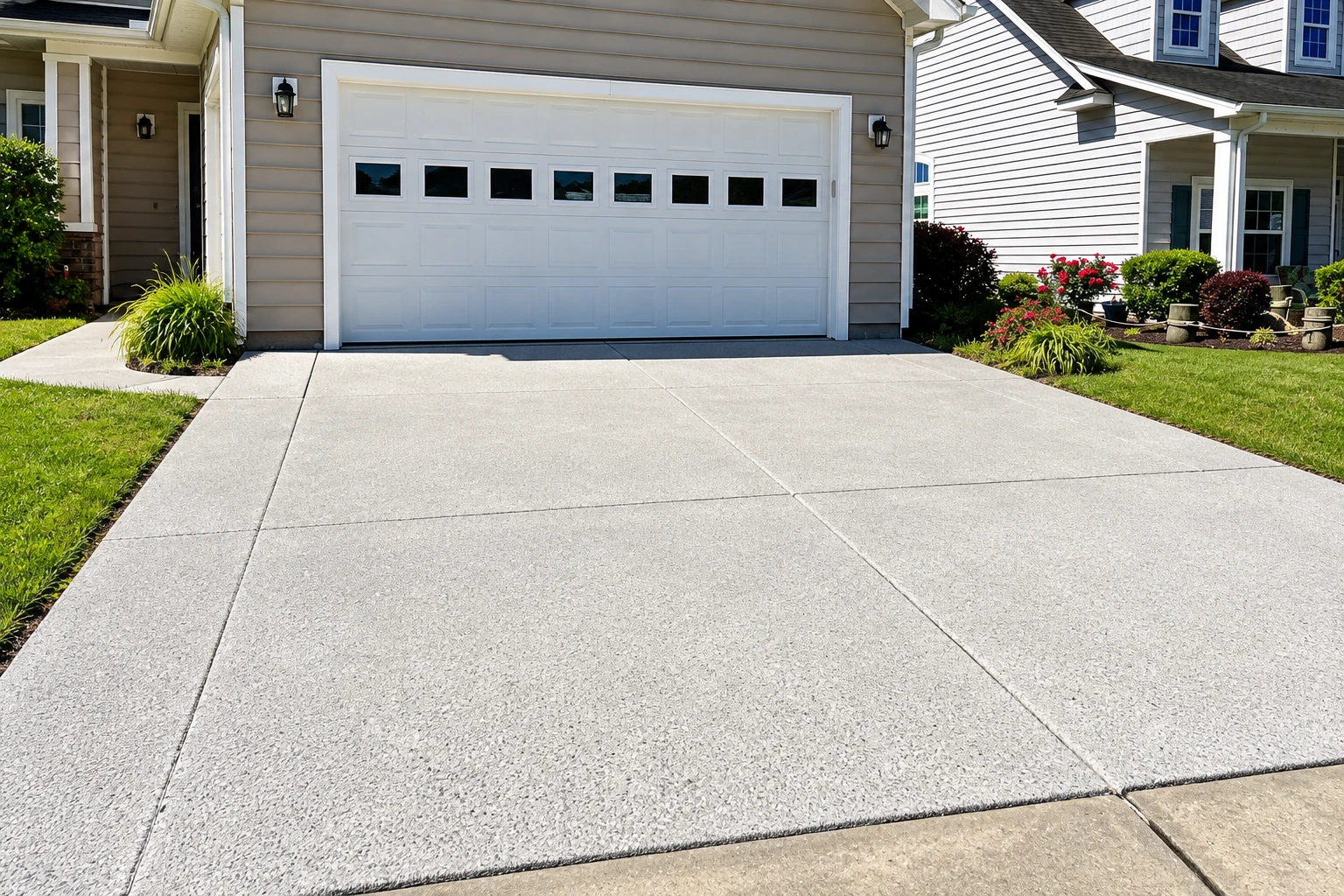
A dig along the house often runs into a walk or a slab, and some piles have to go in from inside, so concrete cutting lets us open a clean, square section instead of breaking up more than we need. When the dig crosses an old drive that was already cracked, it usually makes more sense to replace it through concrete driveway building once the house is steady than to patch it.
Holding it where it is
This suits a house that has moved a little, where the doors still work and the cracks are fine, and the goal is to stop more settling. The piles take the load so the house stays put, without trying to close gaps that have already opened.
Bringing it back up
This suits a house where floors slope or doors won't close, and you want it back near where it started, which one pile maker's manual says its piles can do. Lifting moves walls and finishes again, so we take it slowly, and you should expect some cracks to need patching afterward.
What happens when you call us about foundation raising?
Here's how a foundation job runs with us, from your first call to the walk-through at the end, and who you'll be dealing with at each step along the way.
- Step 01
Call and set a visit
Thank you for calling. We set a time for me to come out, look at the house and hear what you have in mind, so it helps to have your notes on cracks, sticking doors and sloping floors handy.
- Step 02
Walk the house, then estimate
I go through the house with you, and after that visit you get an estimate for the plan we settled on, hold or lift, so you know the cost before anything is scheduled. Before we pick a date, we look up whether the city or the county covers your address.
- Step 03
Do the work, walk it through
Our own crew preps the ground, digs and puts back and finishes any concrete that had to come out, and I'm on site running the work. When it's done, we walk the finished job with you.
Foundation raising in Kingman and the county around it
If your house sits in unincorporated Mohave County, outside any city's limits, the Mohave County Building Division does the plan review and inspection for construction there. The county's Development Services office is at 3250 E Kino Ave in Kingman, (928) 757-0903, open Monday to Friday from 7 A.M. to 6 P.M. and closed on county holidays. Inside city limits the city is the place to ask, so before we set a date we look up which office covers your address, and we take care of the permit application when the job needs one.
The state's geological survey lists the Arizona counties with earth fissures, long cracks that open in the ground, and Mohave isn't one of them, though that list comes from a map of study areas as of 2015 and says nothing about your own lot. What we see more often, here and on jobs in Golden Valley and New Kingman-Butler, is a slab house with a drive or walk poured tight against it, so I plan where to dig and what to cut before the crew arrives. We're based in Kingman and work across the cities around it, and if your address isn't listed, please ask us anyway.
Get an on-site estimate for your foundation
We reply within one business day to set a time for me to come out, and the estimate is free, done at your house and comes with no obligation. After the visit you get the estimate for the plan we talked through.
Why Kingman homeowners call Kingman Concrete Company
I come out and run it
I come out to see the house and give the estimate myself, and I'm on site running the work while our own crew does the prep, forming, pouring and finishing. You deal with the same person from the first look to the walk-through, so nothing you told me gets lost on the way to the crew.
Trained on a city concrete crew
I learned concrete pouring curbs, walks and slabs on a municipal crew, and I started this business in Kingman in 2020. That work taught me to plan each step and check it the same way, because people judge the work years after the crew has gone home.
Licensed and fully insured, every job
We're licensed and fully insured on every job, inside Kingman or out in unincorporated Mohave County. That matters when a crew is digging right beside your walls, because you shouldn't be the one carrying that risk.
On a foundation, the most important decision is made before anyone digs, whether to hold your house where it is or bring it back up, and I'd rather make it with you at the house. Contact us and we'll set a time for me to come out.
Foundation raising questions from Kingman homeowners
How much does foundation raising cost in Kingman, AZ?
The cost is set by your house, mainly by how many piles it needs and how far down the crew has to go to reach ground that will hold them. Cutting and replacing a drive or walk adds to it, while a short run along one wall keeps it down. I give you your own figure after I've seen the house.
How do I tell if my house foundation is settling?
Walk the house and look for cracks at wall corners and over doors and windows, doors or windows that stick, and floors that slope. A homeowner guide on shifting soils suggests writing down where each one shows up, and that room-by-room list is the first thing I go over with you at the visit.
Can we stay in our house while the foundation is being raised?
In most cases, yes, you can keep living at home during the work. One pile maker's design manual says helical piles go in with portable equipment, even in tight spots indoors, and without vibration, so a household can keep using the home with little inconvenience. Expect some noise and an open dig along the wall while the crew works.
Should an engineer review my foundation repair plan?
Yes, one pier maker recommends that a registered professional engineer review the final analysis and plan for each site. It's a fair question to ask about your own job before work starts, and a good one to raise at the estimate.
How do I keep my foundation from settling again after it's raised?
Keep the soil next to and under the house evenly moist, which a homeowner guide on soils that shrink and swell calls the single best step an owner can take against that movement. The same guide advises keeping the soil sloped away from every side of the house and running gutters and downspouts out at least 3 feet from the foundation into ground that drains well.
What happens after a house is lifted on helical piers?
One pier maker's install guide has the crew check that every door and window works, repair cracks, backfill, clean up and take final elevation readings, the measurements of how high each point of the house sits. You can ask for a copy of those final readings to keep with your house papers.
Concrete work that often follows a foundation repair
Concrete cutting
When piles have to go in from inside, or a walk sits where the crew needs to dig, a clean saw cut opens just the section that's needed.
Concrete driveway building
If your drive is cracked, sunken or torn up by the dig, a new one poured on a packed base can follow once the house is steady.
Set up a visit for your foundation
We answer (928) 391-0060 from 7 AM to 10 PM, seven days a week, so you can call in the evening while you're walking the house and checking the doors.