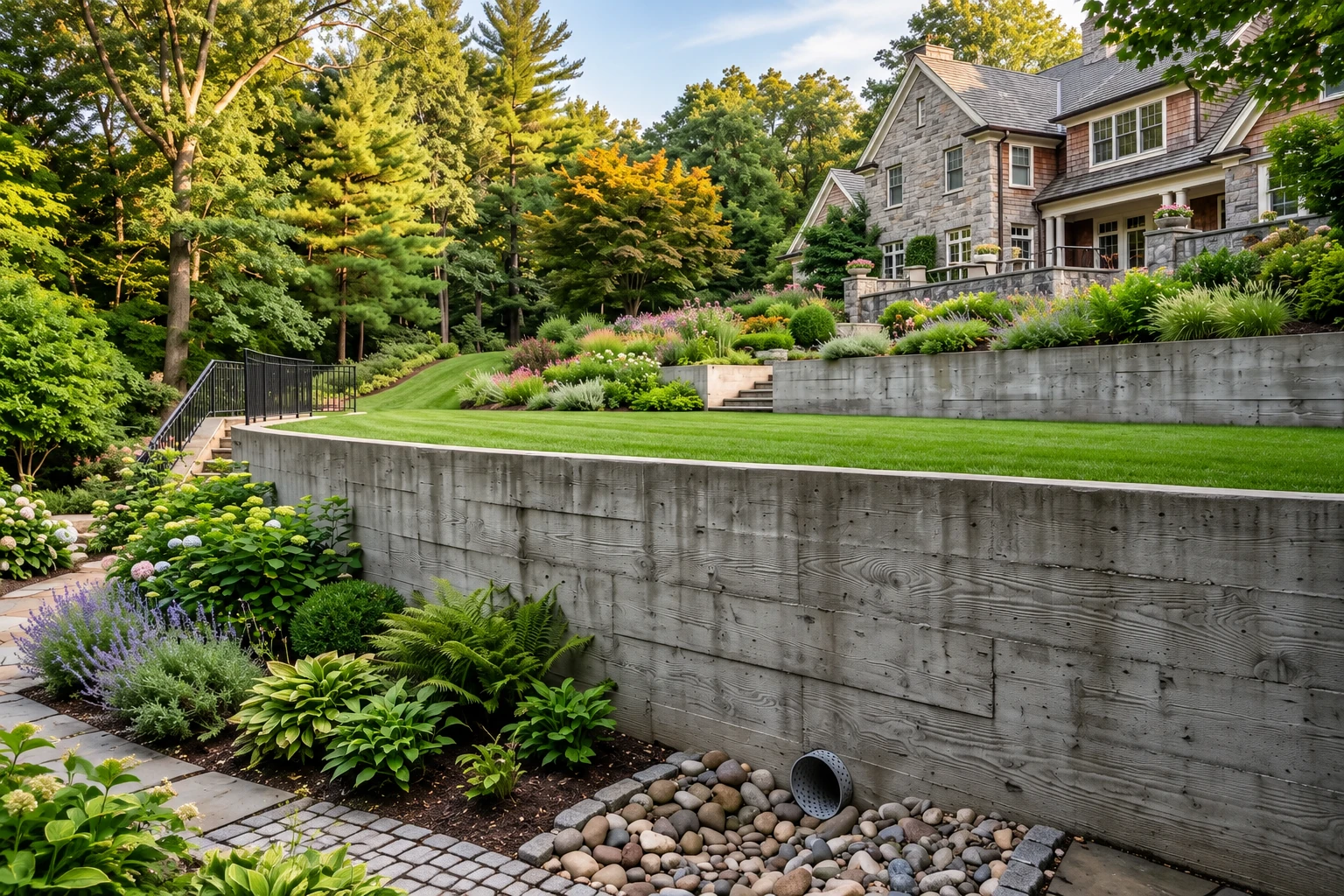
Slab foundation building in Kingman AZ - a home that sits on firm, even ground
Building on your own land and need a slab under the house? We pack the ground evenly first, so your slab starts on a firm base.
- Licensed and fully insured.
- Free on-site estimates.
- We respond within 1 business day.
What goes into building a slab foundation in Kingman?
The short answer: Slab foundation building in Kingman means pouring the concrete slab your house sits on, laid over compacted native soil so the whole home rests on a ground-supported base.
Most people who call us about a slab are building a new house, shop or addition on their own land, and they want to know what it will take. The price usually turns on the size of the slab, how much dirt has to be dug out and packed back, what a soil test shows and which design your plans call for, whether that's a plain slab or one on concrete footings. The schedule depends on getting the soil tested and the permit through, and then on a pour day that suits the weather. I'll give you your own figure once I've seen the site.
How do you know your project needs a slab foundation?
Plans showing slab-on-ground
If the drawings for your house, shop or addition show the floor sitting right on the ground, you need a slab, and it's usually the first thing built on site. Calling once the plans are in hand gives us time to look at the lot before the framers are waiting on us.
Loose or freshly scraped dirt
A pad that has just been scraped or filled can look flat while the dirt underneath is still loose, and loose dirt settles under the weight of a house. Pouring on it as it is usually leads to cracks along the soft spots, and those are hard to fix once walls are up.
Cracks in an older slab
When the slab under an older shop or addition has cracks that keep widening, or one side sits lower than the other, the ground below has usually moved. Pouring new concrete beside it without looking at that ground tends to repeat the problem, so it's worth checking both before you build on.
How we build a slab foundation
I start with the site and your plans, and then our crew digs down past the loose top dirt so the slab won't sit on soft spots. Most of our attention goes to the subgrade, the ground the slab sits on, and we get it evenly packed before any concrete is ordered, because soil packed unevenly settles unevenly and cracks the slab however thick or strong the concrete is. We check that the ground around it falls away from the house, set the forms, and place the rebar, the steel that holds the slab together, as your design calls for. Then we pour, finish the surface, and cut control joints, planned lines that give the concrete a place to crack as it shrinks. After that the slab cures, which means we keep it damp so it gains strength evenly before anyone builds on it.
Some homes need more than a slab, and when your plans call for footings and walls below the floor, our foundation installation work covers it. Small business owners building a shop often need room for customers and trucks too, so we also handle concrete parking lot building on the same property.
Monolithic slab
The edges are thickened into a footing and poured in one go with the floor, which keeps the job simpler. It suits a fairly level lot where the plans allow it, and it's common under houses, garages and shops.
Slab on a stem wall
Footings and a short concrete wall go in first, and the slab is poured inside them, which suits a sloped lot or a floor that needs to sit higher. It takes more steps and usually costs more, but it handles a grade a monolithic slab can't.
What happens when you call us about a slab foundation?
From the first call to the finished slab, here is how the job goes, so you know who you'll talk to and when the concrete gets ordered.
- Step 01
Call and set a visit
Thank you for calling. We'll set a time for me to come out and hear what you have in mind, so please have your address, any soils report and any foundation plans from your building package ready.
- Step 02
Walk the site, then estimate
I look at the ground and the plans with you on site. After that visit you get your estimate, so you know where you stand before anything is ordered.
- Step 03
Confirm the office first
Before we pick a pour date, we look up which office covers your address, the city or the county. That tells us whose review the slab goes through.
- Step 04
Prep, pour and walk through
Our crew preps the ground, sets the forms, pours and finishes the slab. When it's done, we walk the finished job with you.
Slab foundation building in Kingman and Mohave County
Which office reviews your slab depends on your address, so that's the first thing we settle. In the unincorporated parts of Mohave County, the county building division does the plan review and inspections. For a county permit, if your building package has no foundation plans, a local engineer has to submit the foundation design, and it must meet a set soil resistance unless you provide a soils report. That's why I ask for your plans and any soils report early, and we take care of the permit application when the job needs one.
Problem soils turn up throughout Arizona, from Yuma in the southwest to the northeast corner of the Colorado Plateau, so I treat every lot as unknown until it's been tested. We're based in Kingman and work across the cities around it, including Golden Valley and New Kingman-Butler, and if your address isn't listed, please ask us anyway.
Get a free on-site estimate for your slab foundation
We reply within one business day and set a time for me to come out and look at your site. The estimate is free and comes with no obligation.
Why Kingman homeowners call Kingman Concrete Company
The owner gives your estimate
I come out to see the job and give the estimate myself, and I run the work on site while our own crew does the prep, forming, pouring and finishing. You talk to the person responsible for your slab from the first visit to the last.
Trained on a city crew
I learned concrete pouring curbs, walks and slabs for a city crew, and I started this business in Kingman in 2020. Public work taught me to plan a pour carefully and check it the same way, which matters most on the parts you can't see later.
Licensed, insured and guaranteed
We're licensed and fully insured, which protects you while our crew works on your property. We stand behind the work with one plain promise, satisfaction guaranteed.
When you're ready, call (928) 391-0060, email info@kingmanconcretecompany.com or send us your project details, and have your address and any plans or soils report handy.
Slab foundation questions we hear most
How much does a slab foundation cost in Kingman, AZ?
We can't give a fair number until I've seen your lot and plans, because the ground work changes from one site to the next. Size and design set much of the price, but how much dirt has to be dug out and packed is what varies most. When budgets get tight, base prep is often the first thing people want to trim, and it's the one place I'd advise against cutting, since nobody sees it on pour day but everyone notices it years later.
How do I find out if my lot has expansive soil?
Hire a geotechnical firm, an engineering company that tests soil, to take borings on your lot and test how much the soil swells, which is the surest check. Book it early, before the slab is designed, so the plan is built around what's actually under your lot. If you already have a soils report, bring it to the site visit.
Does a post-tensioned slab work on soil that shrinks and swells?
It can, and the trade group for this kind of slab describes it as a cost-efficient, high-performance choice for house foundations on soil that shrinks and swells. In a post-tensioned slab, steel cables run through the concrete and are pulled tight after it hardens. Whether it suits your lot depends on your soil test and your foundation design, so it's a good question to raise with your engineer and with us.
How do I keep expansive soil from damaging my foundation?
Keep water from collecting next to the house, because damage from expansive soil comes from the ground getting wet and drying out over and over. The Arizona Geological Survey advises keeping plants away from the foundation for that reason. When we build a slab, we check that the ground around it falls away from the house so water doesn't run toward it.
What is the best way to pour a slab foundation in hot weather?
Plan the pour around the weather, because national hot weather guidance says high heat, low humidity and wind all affect how concrete is mixed, hauled and placed. We schedule pours for the cooler part of the day so the top doesn't dry out before it's finished, since that can leave a weak, dusty surface. You're welcome to ask how we'll handle the forecast for your pour day.
Will a new slab foundation crack like my old one?
Most slabs get some fine cracks as the concrete dries and shrinks, but a slab on evenly packed ground shouldn't crack the way one does when the dirt settles under it. The control joints we cut give those shrinkage cracks a planned place to go, so they follow straight lines instead of wandering across the floor.
Foundation and site work that often goes with a slab
Foundation installation
When your plans call for footings and walls under the floor rather than a slab alone, this covers the deeper foundation work your house needs.
Concrete parking lot building
Building a shop or small business on your land usually means room for customers and deliveries, and a concrete lot gives vehicles a hard, lasting surface.
Call before the soil test is booked
Call (928) 391-0060 while you're lining up the soil test and permit, so the site visit and estimate are done by the time you're ready to set a pour date.